

Multifaceted conclusion of the 18th BRICS Summit in New Delhi
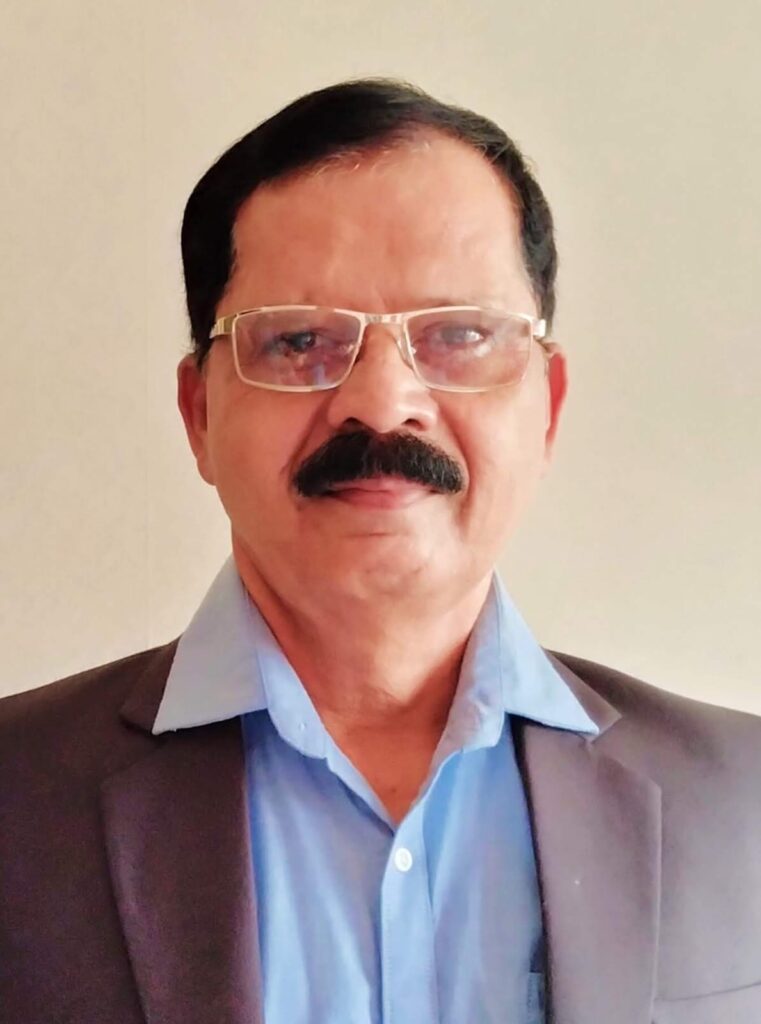
Mumbai shrekesh Choubey:-
The BRICS 11-nation Summit was concluded in New Delhi on 12th and 13th September under the chairmanship of India. What will or may benefit India from this summit? There should be no objection to draw further conclusions considering the pros and cons of India’s national interest considering the three superpowers China, America, and Russia.
BRICS consists of 11 countries namely Brazil, Russia, India, China, South Africa, Egypt, Ethiopia, Iran, United Arab Emirates, Saudi Arabia and Indonesia. These 11 countries represent 49.5% of the world’s population, 40% of GDP and 26% of world trade. If we take into account the reality of the Summit 2026, it can be said that the 18th Summit of BRICS held in New Delhi on 12th and 13th September 2026 was not just a meeting of the heads of state of eleven countries, but how effective the voice of the “global South” would be in the changing global system. It was an important test of what role India could play in that process. While assuming the post of BRICS president in 2026, India put forward the formula “Building for resilence, innovation, co-operation and sustainability”. More than 400 meetings and various activities were held in 30 cities of India during the year.
The New Delhi Declaration succeeded in forming widespread consensus on issues such as reforms in global administration, trade, finance, technology, sustainable development, health and public participation. That is why this conference can be seen not only as a diplomatic success but as a global balance and a strong group. This conference has increased India’s global diplomatic influence which is the biggest benefit for India. This shows that India’s economic and diplomatic influence has increased. India got an opportunity to interact with important countries in China, Russia, Iran, Saudi Arabia, UAE, Brazil, South Africa, Indonesia and Africa.
Prime Minister Narendra Modi held several bilateral meetings during the BRICS conference. The interaction with Chinese President Xi Jinping, talks with Russian President Vladimir Putin, and meetings with leaders of countries in West Asia and Africa strengthened India’s image as a “a central country that communicates in many groups” instead of being “part of a particular group”, There is a great strength in policy. BRICS’s most complex interests for India are relations with China. India and China have serious differences in borders, trade, technology and strategic competition. Yet BRICS cannot be an anti-China platform for India. But BRICS gave India another institutional platform to maintain communication with China. Xi Jinping’s visit to India after seven years and communication between the two countries, though not the final stage to normalize the relationship, is an important step in managing tensions. But it cannot be said that strategic mistrust has been resolved yet. That is why India should see this dialogue as ‘the ability to avoid conflict while competing with China’ rather than ‘friendship with China’.
The biggest political advantage is that BRICS has created an image of India as a leader of the Global South. India’s attempt to give more representation to the developing world beyond the developed western countries is commendable for this. In the New Delhi Declaration of the Council, the demand for increasing the representation of developing countries in global institutions, including the United Nations Security Council, was re-emerged. The manifesto states that China and Russia have supported India’s effective role in the India’s Security Council. This is an important diplomatic benefit for India. But since support and physical membership are two different stages, India should welcome the support in the manifesto; But it should not be considered as our final victory.
BRICS considered reducing the dependence on the dollar in global trade. Discussions began on trade between local currencies, cross-border payment systems and alternative financial systems. This can be of great benefit to India. If transactions with countries like India-Russia, India-UAE, India-Iran, India-Brazil etc. increase in local currencies, transaction costs on the dollar, the risk of restrictions and dependence on the international payment system can be greatly reduced. BRICS has not created an immediate alternative to the dollar. It is extremely difficult to substitute the global acceptance of the dollar, the depth of the US financial markets, credibility and international financial infrastructure. So India’s policy is not to ‘anti-dollar fight’, but to create a ‘more suitable alternative to currency transactions’.
India’s UPI, digital public infrastructure, fintech, artificial intelligence, digital administration and technology capabilities can be useful for BRICS countries. The New Delhi Declaration has given importance to cooperation in science, technology and innovation. Initiatives like BRICS Science and Research Repository are likely to increase knowledge, research and technology cooperation. This is a great opportunity for economic diplomacy for India. India should develop BRICS as a market in direct exports of UPI and digital payments, digital public infrastructure, health-technology, AI, agrotechnology, space quantum technology instead of just making speeches in BRICS.
India’s biggest invisible benefit of this summit is “Strategic Autonomy”.
Today in the world, India has realized that it is dangerous for any big country to be completely connected with one group due to US-China conflict, Russia-Ukraine Europe conflict and America, Israel and Iran conflict in West Asia, and this is the real strength of India. BRICS legitimizes this multifaceted foreign policy of India. This is probably the biggest achievement of this conference for India. India’s relationship with the US, maintaining relations with Russia, communicating with China, enhancing economic relations with West Asia and leading in the Global South are important today. India should see BRICS as a means of national, economic and strategic interest rather than just a political platform.
India needs to keep the following five important priorities in view of BRICS countries. 1. India to increase direct trade and investment with BRICS countries. 2. To increase the international importance of Indian Rupee by trading in rupees. But giving preference to a viable local currency system rather than forcing ‘BRICS Currency’. 3. India should lead technology in BRICS in UPI, AI, digital, infrastructure, space and pharmaceutical manufacturing. 4. While increasing cooperation with BRICS in a balanced competition with China, no compromise on national security and border issues. 5. India should follow the way to strengthen BRICS by maintaining relations with America and Europe.
The BRICS conference held in New Delhi is not an ‘opportunity to dominate the world’ for India but a ‘opportunity to strengthen its position in the changing power of the world’. India has achieved three things in this conference. First: Leadership image creation on Global South’s questions. Second : Ability to simultaneously communicate with China, Russia, West Asia and other emerging forces. Third: Opportunity to express one’s voice more prominently in the discussion of improvement in global economic and political institutions. But it would also be wrong for India to over-importance to BRICS. Because the political, economic and strategic differences in the member countries can prevent him from becoming a united superpower.
So the future of BRICS will probably develop not as a “substitute to the west”, but as “one of the most important powerhouses, including the West”. Will India’s real test be a member only in this new multi-polar world, or will it establish itself as the decisive center of the world through BRICS? The answer to this question depends on India’s economic strength, technology leadership, defense capabilities and most importantly independent and balanced foreign policy in the next decade. In today’s situation BRICS is not the ultimate goal for India but an important tool in India’s journey of world power. If India uses this tool wisely, in the multi-polar world of the 2030s, India can be a major global power generation rather than just the voice of global South.
Vishwasrao Palekar 15.09.2026