

Consumer groups and public health experts urge citizens to eliminate mercury-based medical devices to protect people and the planet
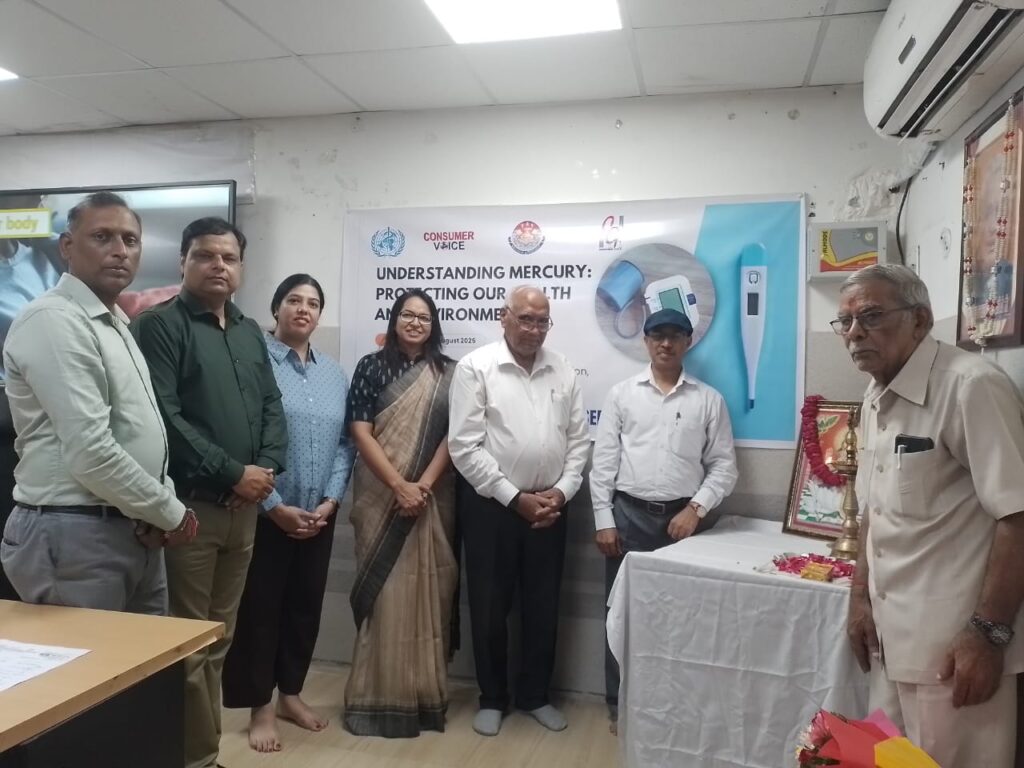
(Lucknow ): In a powerful call to action, public health experts, government officials, civil society organisations and environmental advocates have stressed the urgent need to completely stop the use of mercury-containing devices—such as thermometers and sphygmomanometers—in India. The appeal was made at a workshop convened by Consumer VOICE and Consumer Guild Lucknow collaboration with Department of Public Administration, Lucknow University to discuss the health harms of mercury exposure at home, especially among children and women, and India’s commitment to the Minamata Convention on Mercury.
Thermometers and blood pressure-measuring devices containing mercury are safe only when intact. Once broken or discarded, the mercury in them can vaporise and these toxic vapours pose grave health risks to all living beings. Exposure through inhalation and touch can damage the lungs, kidneys, and nervous system. Mercury waste can contaminate local environments including air, soil and water systems and enter the food chain thus exposing the populations.
India’s Ministry of Health and Family Welfare and Ministry of Environment, Forest and Climate Change is working with WHO India to phase out mercury from medical devices as part of their commitment to Minamata Convention. The Convention aims to protect human health and the environment from anthropogenic emissions and releases of mercury and mercury compounds. Creating awareness about the issue is one of the components of this project.
Mercury is recognized by World Health Organization (WHO) as one of the top 10 chemicals of major public health concern. Even small amounts can severely impact the nervous, digestive and immune systems—especially in children. Neurological symptoms include cognitive delays, language disorders, seizures and memory loss. When released into the environment, mercury transforms into methylmercury, a bioavailable and highly toxic form that accumulates in aquatic life, posing long-term food chain risks, particularly to unborn and nursing children.
In her opening remarks Dr. Geeta Yadav, Additional Professor, Department of Pathology, King George’s Medical University, Lucknow stressed on the need for phasing out of mercury products due to mercury’s toxicity and its detrimental effects on human health and the environment.
Broken mercury products should be handled and disposed off with extreme care to minimize the potential health and environmental hazards of mercury. A study in 2011 estimated that eight tonnes of mercury was being released annually from medical measuring devices in India (with nearly 69% attributed to mismanaged disposal of blood-pressure-measuring devices (sphygmomanometers) and the rest from mercury thermometers). (Ref: https://toxicslink.org/publications/reports/estimation-of-mercury-usage-and-release-from-healthcare-instruments-in-india
Highlighting the importance of bio-medical waste management, Prof.(Dr.) Bharat Raj Singh , (Environmentalist), said: “It is vital that all healthcare facilities in India follow strict mercury spill management protocols, invest in training, and shift to safer, mercury-free alternatives. Responsible handling today will protect future generations from irreversible harm.”
Consumer awareness and knowledge on safe disposal of mercury products is critical. “This initiative of spreading consumer awareness is significant, not just for protecting well-being of our family, but because it reduces the impact of healthcare on our shared environment,” said Mr Abhishek Srivastava of Consumer Guild. Other speakers included Prof. N.L Bharti, Head Department of Public Administration, Prof. Vaishali Saxena, Dr. S.S Chauhan . they all underscored the urgent need for transitioning to safer digital alternatives and strengthening waste management systems.
“Exposure of pregnant women, lactating women, women in childbearing age to mercury can harm the next generation. . Eliminating mercury-containing medical devices and switching to non-mercury (digital and aneroid equipment) is saving lives while protecting the environment,” said “The healthcare sector is going mercury-free and has found digital products to be accurate and affordable. It’s time that the common man also adopts these mercury free devices,” said Rinki Sharma from Consumer VOICE, a Delhi-based consumer organisation working on consumer rights and safety for several decades.